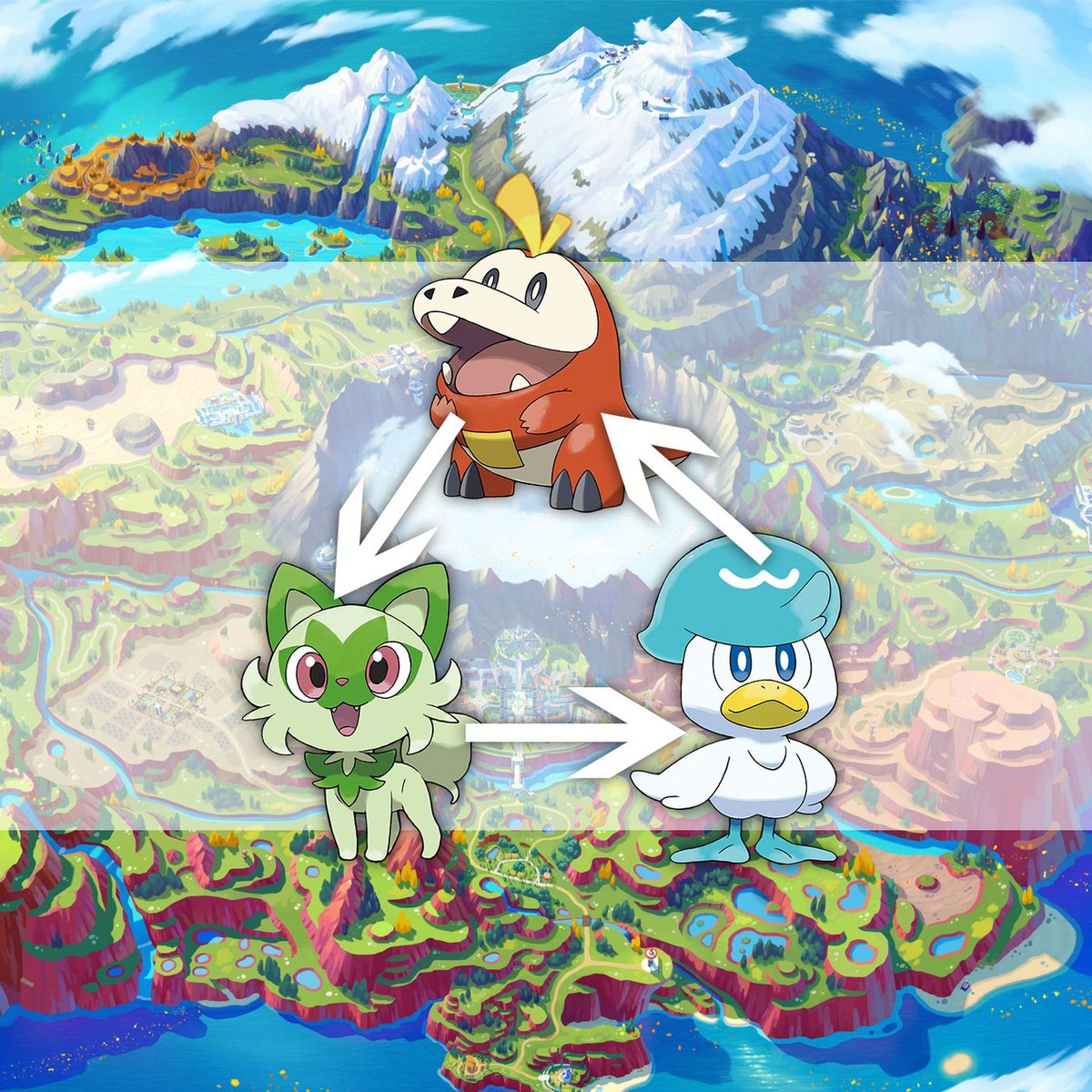
Step into the world of Pokémon, and you're quickly faced with an intricate web of elemental interactions that dictate victory or defeat. Far beyond just cute creatures, understanding Pokémon Type Mechanics is the bedrock of strategic play, transforming casual encounters into calculated battles. It’s the difference between a frustrating loss and a triumphant win, a simple "hit hard" approach versus a masterclass in tactical foresight. If you want to elevate your game, whether you're tackling gym leaders, dominating raid battles, or challenging other trainers, mastering the type chart is non-negotiable.
At a Glance: Your Quick Guide to Pokémon Types
- 18 Core Types: Every Pokémon and move has one or two types, from fiery blazes to spectral shadows.
- Strengths & Weaknesses: Types interact like a sophisticated game of rock-paper-scissors, determining damage multipliers.
- Damage Multipliers: Attacks can deal 2x (super effective), 4x (double super effective), 0.5x (not very effective), 0.25x (doubly resisted), or 0x (no effect/immune) damage.
- Same Type Attack Bonus (STAB): Using a move that matches your Pokémon's type grants a 1.5x damage boost.
- Dual-Type Complexity: When facing two types, effects can stack (4x, 0.25x) or even neutralize (1x).
- Evolving Rules: The type chart has seen subtle yet significant changes across Pokémon generations, introducing new types and adjusting interactions.
- Modern Twists: Mechanics like Tera Types (Scarlet and Violet) add dynamic in-battle type changes, shaking up strategy.
- Steel Reigns Supreme? Steel is often lauded as one of the best defensive types, boasting numerous resistances and an immunity.
The Elemental Dance: What Are Pokémon Types?
At its core, the Pokémon battling system is a sophisticated elemental hierarchy. Each of the 18 Pokémon types—Normal, Fighting, Flying, Poison, Ground, Rock, Bug, Ghost, Steel, Fire, Water, Grass, Electric, Psychic, Ice, Dragon, Dark, and Fairy—comes with its own set of intrinsic strengths and weaknesses. Think of it as a highly evolved version of rock-paper-scissors, but with many more options and far greater strategic depth.
When a Pokémon uses a move, its type interacts with the defending Pokémon's type(s) to determine the damage output. This isn't just flavor text; it's the fundamental calculation that underpins every single attack. A Fire-type move hitting a Grass-type Pokémon will feel like a scorching blast, while that same move bouncing off a Water-type will feel like a mere splash. This system forces trainers to think critically about their team composition and their move choices in every turn of battle.
The Art of the Attack: Damage Multipliers in Action
This is where the rubber meets the road. Understanding the damage multipliers is crucial because they can drastically swing the momentum of a battle.
- "It's super effective!" (2x Damage): When your move's type is strong against an opponent's type, you hit twice as hard. For example, a Water-type move against a Fire-type Pokémon.
- "It's not very effective..." (0.5x Damage): If your move's type is weak against an opponent's type, your damage is halved. A Grass-type move against a Fire-type, for instance.
- "No effect!" (0x Damage): Some types are completely immune to others. A Ground-type move against a Flying-type Pokémon, or a Ghost-type move against a Normal-type Pokémon, will deal no damage at all. This is a battle-ending revelation if you're not prepared.
These multipliers are the basic building blocks, but they combine in powerful ways, especially when considering dual-type Pokémon or the Same Type Attack Bonus.
Same Type Attack Bonus (STAB): Your Hidden Power Boost
Imagine you're a Fire-type Pokémon, and you unleash a blistering Fire-type move. It just feels right, doesn't it? The game agrees! This synergy is formalized through the Same Type Attack Bonus (STAB).
When a Pokémon uses a move that shares one of its own types, that move's power is increased by 1.5x. This bonus is applied after the initial move power and before other type advantages are calculated. It's a significant boost that encourages Pokémon to use moves of their own type, making them naturally stronger with their signature attacks.
Here's where it gets exciting: STAB stacks with other type advantages. Consider a Water-type Pokémon using a Water-type move against a Ground/Rock-type opponent:
- Water vs. Ground: 2x (super effective)
- Water vs. Rock: 2x (super effective)
- Water STAB: 1.5x
- Total Damage: 2 x 2 x 1.5 = 6x normal damage!
This kind of devastating combination is what experienced trainers aim for, turning a single well-placed move into a knockout blow.
Navigating Complexity: Dual-Type Pokémon and Their Matchups
The vast majority of Pokémon aren't just one type; many are dual-type, boasting two distinct elemental affiliations. This adds a fascinating layer of complexity and strategy to every battle. When attacking a dual-type Pokémon, a move's effectiveness is determined by its interaction with both of the target's types.
Let's break down the common scenarios:
- Doubly Super Effective (4x Damage): If your move is super effective against both of the target's types, you'll deal a massive 4x damage.
- Example: A Fire-type attack against a Grass/Steel-type Pokémon. Fire is super effective against Grass (2x) and Steel (2x). Result: 2 x 2 = 4x damage. These are often the most satisfying KOs.
- Doubly Resisted (0.25x Damage): Conversely, if your move is not very effective against both of the target's types, you'll hit for a paltry 0.25x damage.
- Example: A Fire-type attack against a Water/Dragon-type Pokémon. Fire is not very effective against Water (0.5x) and also not very effective against Dragon (0.5x). Result: 0.5 x 0.5 = 0.25x damage. You'll barely scratch them!
- Neutralized Effect (1x Damage): The most common and often overlooked scenario is when a move is strong against one type but weak against the other. In this case, the effects balance out, resulting in normal 1x damage.
- Example: A Fire-type attack against a Water/Ice-type Pokémon. Fire is not very effective against Water (0.5x) but super effective against Ice (2x). Result: 0.5 x 2 = 1x damage. It's neutral!
This balancing act is why simply knowing one type isn't enough; you must consider the full elemental profile of your opponent. It's also why some Pokémon, with strategically chosen dual-typings, can be incredibly resilient or surprisingly vulnerable.
Evolving Metas: How Types Have Changed Over Generations
While the core mechanics have remained remarkably consistent, the Pokémon world isn't static. Over nearly three decades, the type chart has seen crucial adjustments, often to introduce new strategic possibilities or address power imbalances.
- Generation 1 (Kanto, Red/Blue/Yellow): The Dawn of Types
- The original 15 types laid the groundwork. However, some interactions were famously quirky:
- Ghost-type moves had no effect on Psychic Pokémon (this was a bug or oversight, as lore suggested Ghost should be strong).
- Bug was super-effective on Poison and vice-versa (later changed to Bug being not very effective against Poison, and Poison dealing regular damage against Bug).
- Ice-type moves were neutral against Fire-type Pokémon (now they are not very effective).
- Generation 2 (Johto, Gold/Silver/Crystal): Introducing Dark and Steel
- This was a monumental shift. The introduction of Dark and Steel types added entirely new strategic dimensions. Dark types were designed to counter the then-dominant Psychic types, while Steel provided a robust defensive presence.
- At this time, Ghost and Dark moves were not very effective against Steel-type Pokémon (they now do neutral damage).
- Generation 6 (Kalos, X and Y): The Rise of Fairy
- Perhaps the most impactful single change since Gen 2 was the introduction of the Fairy type. This was a direct response to the overwhelming power of Dragon-type Pokémon, which previously had very few weaknesses.
- Fairy types are super effective against Dragon, Fighting, and Dark, and they resist Bug and Dark, while being immune to Dragon. This addition significantly rebalanced the meta and made Dragon-type Pokémon think twice.
- The Ghost/Dark vs. Steel interaction also changed in Gen 6, making those moves deal neutral damage to Steel.
These changes aren't just trivia; they demonstrate how Game Freak actively maintains a delicate balance within the type system, ensuring that no single type becomes too dominant and that new Pokémon and strategies remain viable. When you're building a team or planning a battle, it's not just about current types, but also occasionally about what types have evolved through history.
Beyond the Basics: Special Type-Altering Mechanics
Just when you think you've got the type chart memorized, the Pokémon world throws in new mechanics to keep you on your toes. These special abilities and phenomena can dramatically alter a Pokémon's type mid-battle, requiring quick thinking and adaptability.
Tera Type: The Crystal Power (Scarlet and Violet)
Pokémon Scarlet and Violet introduced the Tera Type mechanic, a revolutionary system that allows Pokémon to change their type temporarily during battle or in Tera Raids. When a Pokémon Terastallizes, it gains a special Tera Type (which can be any of the 18 types, regardless of its original types) and becomes adorned with a distinctive crystal ornament.
- Strategic Impact:
- Offense: A Pokémon's Tera Type grants it STAB for moves of that type. If it already shared a type, it gets an even greater STAB boost (2x instead of 1.5x) for moves matching both its original type and its Tera Type. This can turn a seemingly weak move into a game-changer.
- Defense: Changing type means changing weaknesses and resistances. A Water/Ground Pokémon, usually doubly weak to Grass, could Terastallize into a Flying Tera Type, suddenly becoming immune to Grass moves. This offers incredible defensive versatility, allowing Pokémon to shed critical weaknesses or gain valuable resistances.
- Surprise Factor: Opponents won't know your Tera Type until you use it, making it a powerful tool for unexpected turnarounds.
Mastering Tera Types requires understanding not just the standard type chart, but also anticipating how an opponent might use this mechanic to protect their weaknesses or exploit yours.
Abilities That Alter Types (e.g., Kecleon's 'Color Change')
Beyond Terastallization, certain Pokémon possess unique abilities that can alter their type under specific conditions. Kecleon's 'Color Change' is a classic example: if Kecleon is hit by a damaging move, its type changes to match the type of that move. This can lead to unpredictable defensive shifts, requiring opponents to constantly adjust their strategy. While less common than Tera Types, these abilities emphasize that a Pokémon's type isn't always static.
Identifying Your Opponent's Achilles' Heel: Checking Pokémon Types
Knowing the type chart is one thing; identifying your opponent's types in the heat of battle is another. Thankfully, the main series games provide several helpful ways to do this:
- Pokédex Entry: For any Pokémon you've previously caught or encountered, its full type information (including primary and secondary types, if applicable) is readily available in its Pokédex entry. This is your primary resource for preparation.
- Party/Storage Box Preview: When organizing your team or interacting with your stored Pokémon, their types are clearly displayed, often with color-coded bars for quick identification.
- In-Battle Prompts: Modern Pokémon games (like Scarlet and Violet) offer invaluable assistance. When selecting a move, if it's "super effective" or "not very effective" against the opposing Pokémon, the game will often display a prompt right there on the move selection screen. This is a massive quality-of-life improvement for newer players or when facing unfamiliar Pokémon.
- Terastallized Visual Cues: During battle, a Terastallized Pokémon is unmistakable, adorned with a large, distinctive crystal ornament above its head. While this doesn't tell you which Tera Type they've adopted, it signals a significant change you need to account for. Their Tera Type will also be displayed in a crystal-stylized bar next to their health.
Developing an intuitive grasp of types comes with practice, but leveraging these in-game tools is essential for making informed decisions.
The Unsung Hero: Why Steel is Often Crowned the 'Best' Type
In the grand hierarchy of Pokémon types, some stand out for their exceptional utility, and Steel often tops the list, especially from a defensive standpoint. While no type is truly "best" in all scenarios, Steel's robust profile makes it a consistently valuable asset on almost any team.
- Defensive Prowess: Steel is a defensive powerhouse. It boasts resistances to ten different types: Normal, Flying, Rock, Bug, Steel, Grass, Psychic, Ice, Dragon, and Fairy. This incredible array of resistances means it can switch into many common attacks with minimal damage. Even better, it's completely immune to Poison-type attacks, making it a fantastic pivot against Poison-focused threats.
- Offensive Utility: While not its primary strength, Steel still offers solid offensive coverage. It's super effective against Rock and Ice, two types that can be defensively challenging for other Pokémon. Crucially, no types are entirely immune to Steel-type moves, ensuring that a Steel-type attack will always deal some damage (unless the target resists it completely).
- Powerful Pokémon: Many formidable Pokémon, including a significant number of Legendaries and Mythicals, incorporate Steel typing. This further solidifies its reputation as a strong and reliable type.
Of course, Steel isn't invincible. It has three weaknesses: Fighting, Fire, and Ground. A well-placed super effective move from one of these types can still severely damage or knock out a Steel-type Pokémon. But its overall balance of resistances, immunity, and offensive pressure makes it a cornerstone of many competitive teams.
The Future of Typing: Are New Types on the Horizon?
With 18 distinct types, the Pokémon battle system feels incredibly rich and balanced. The question naturally arises: will we ever see new types introduced?
Historically, new types are a rare event. Since the franchise began in 1996, only three types have been added: Dark and Steel in Generation 2 (1999), and Fairy in Generation 6 (2013). This scarcity suggests a deliberate approach by Game Freak.
Given the current system's intricate balance, it's unlikely that new types will be added in the near future. Each new type requires a complete re-evaluation of every existing type interaction, which can have cascading effects on the competitive meta-game. The introduction of Tera Types in Generation 9 also shows a preference for modifying existing type mechanics rather than adding entirely new ones, offering dynamic changes without permanently altering the fundamental type chart. For now, mastering the 18 types and their dynamic interactions remains the key.
A Word on Pokémon GO: Understanding Mobile Differences
While the core philosophy of type matchups carries over to Pokémon GO, the damage multipliers are subtly different, reflecting the faster-paced, simplified combat of the mobile game. If you're primarily a GO player, keep these distinctions in mind:
- Super Effective Moves: In Pokémon GO, these deal 1.6x damage (compared to 2x in the main series).
- Not Very Effective Moves: These deal 0.625x damage (compared to 0.5x in the main series).
- Moves That Would Typically Be Immune (0x): In GO, there are no true immunities. Instead, these interactions deal 0.39x damage, meaning even a typically "no effect" move will still chip away at HP, albeit minimally.
- Doubly Weak Moves (4x): In GO, these deal 2.56x damage (compared to 4x in the main series). This is still a significant boost but less punishing than in the main games.
These adjustments in Pokémon GO aim to keep battles flowing and ensure that no single matchup completely shuts down an opponent, allowing for more strategic flexibility within its real-time combat system.
Mastering the Meta: Your Next Steps in Type Mastery
Truly understanding Pokémon Type Mechanics isn't just about memorizing a chart; it's about internalizing the flow of battle. It's the ability to anticipate your opponent's moves, identify their weaknesses, and leverage your Pokémon's strengths with precision.
To move from merely knowing to truly mastering, consider these actionable steps:
- Practice Against AI: Battle trainers in-game, focusing not on raw power, but on consistently choosing moves with type advantage. Pay attention to the "super effective" and "not very effective" prompts.
- Team Building with Coverage: When assembling your team, aim for a variety of types. Can your team handle common threats like Steel-types? Do you have an answer for powerful Fairy or Dragon Pokémon? Consider both offensive and defensive coverage.
- Utilize Dual-Type Knowledge: Don't just look at a Pokémon's first type. Always consider both to avoid nasty surprises or to spot those lucrative 4x weakness opportunities.
- Experiment with Tera Types: In Scarlet and Violet, consciously think about when and why you Terastallize. Are you going offensive for a STAB boost, or defensive to shed a weakness? The strategic depth here is immense.
- Review Battles: After a challenging battle, especially a loss, review what happened. Which of your Pokémon struggled? Did you miss a crucial type advantage? Learning from mistakes is the fastest path to improvement.
The Pokémon world is ever-evolving, but the fundamental principles of type mechanics remain the constant guide. Embrace this knowledge, and you'll find yourself not just winning more often, but truly enjoying the strategic depth that Pokémon battles offer.