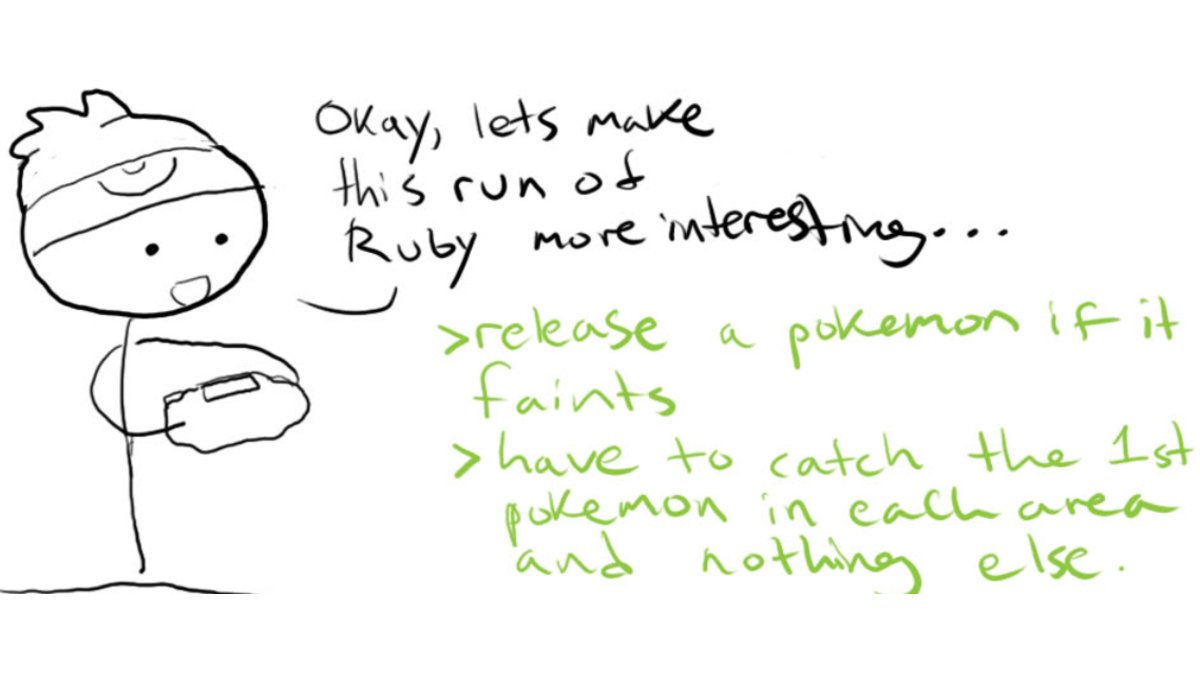
You've faced the ultimate test of a Pokémon trainer: the Nuzlocke. You've braved countless faints, mourned beloved partners, and emerged victorious (or delightfully defeated) more times than you can count. But what happens when the thrill of the standard Nuzlocke starts to feel, well, standard? When the call of a fresh, uncharted adventure echoes louder than the familiar path? It's time to dive deep into the world of Pokémon Nuzlocke & Challenge Ideas, pushing the boundaries of creativity and difficulty to craft a truly unforgettable journey.
This isn't just about making the game harder; it's about reimagining how you play, forcing new strategies, and finding joy in the unexpected. Whether you're a seasoned Nuzlocker looking for a mind-bending twist or someone who's conquered the Elite Four a hundred times and needs a reason to revisit old regions, you'll find inspiration here. Forget simply catching the first Pokémon you see; let's talk about turning your run into an epic tale.
At a Glance: What You'll Discover
- Beyond the Basics: Why standard Nuzlockes might need a refresh and how to get truly creative.
- Core Concepts: A quick reminder of the standard Nuzlocke rules you'll be building upon.
- Customizing Your Experience: How to tailor challenges to your preferred difficulty and playstyle.
- Simple Tweaks, Big Impact: Nuzlocke modifiers for subtle yet significant changes.
- Thematic & Roleplay Runs: Ideas to infuse your game with narrative depth and unique team compositions.
- Extreme Difficulty Escalators: For those who truly want to suffer (in the best way possible).
- Community-Inspired Twists: Niche and clever ideas from fellow trainers.
- Avoiding Common Pitfalls: Tips for balancing fun and frustration in your custom challenge.
Beyond the Basics: Why Go Further with Nuzlocke Challenges?
The standard Nuzlocke rules — catch only the first Pokémon on each route, faint equals death, and nickname every Pokémon — transformed the way many of us experience Pokémon. It added stakes, fostered bonds, and revealed the strategic depth beneath the surface. Yet, as one Reddit user aptly put it, the standard Nuzlocke "has been done a million times." If you're anything like the trainers seeking ideas on forums, you're yearning for a "bit more creative" than just the default.
This desire for novelty isn't just about chasing difficulty. It's about finding new ways to engage with games you love, rediscovering forgotten Pokémon, and telling unique stories. It's about embracing limitations to spark unprecedented creativity, turning a familiar journey into a truly distinct saga. So, while we respect the classics, let's explore how to build upon that strong foundation.
The Foundation: Standard Nuzlocke Rules (A Quick Refresher)
Before we start bending and breaking, let's quickly outline the core tenets of a traditional Nuzlocke run. These are the rules that typically define the experience, and most challenge ideas stem from modifying or adding to them:
- First Encounter Clause: You can only catch the very first Pokémon you encounter in each new area. If it faints or flees, tough luck – you miss your chance for that route.
- Permadeath Clause: If a Pokémon faints in battle, it is considered "dead" and must be permanently removed from your team and boxed (or released).
- Nickname Clause: All caught Pokémon must be given a nickname. This helps foster a stronger emotional connection and makes the inevitable losses more impactful.
- Optional: Shiny Clause: Many players allow catching and using shiny Pokémon regardless of the first encounter rule, as they are so rare.
- Optional: Species Clause: To prevent catching multiple members of the same evolutionary line (e.g., catching a Pidgey, then a Pidgeotto), some players add a rule that if the first encounter is a Pokémon you already own or have boxed, you can skip it and try for the next encounter.
With these bedrock rules in mind, let's explore how to spice things up.
Crafting Your Challenge: Key Considerations Before You Start
Before you dive headfirst into a new challenge, take a moment to consider what kind of experience you're truly seeking. The beauty of Nuzlocke variants is their flexibility, but a little planning goes a long way.
Game Choice: The Canvas for Your Adventure
The generation and specific game you choose can dramatically impact the viability and difficulty of certain challenges.
- Older Generations (Gen 1-3): Often simpler mechanics, fewer Pokémon, and less forgiving grinding. Challenges here might lean more into resource management or restricted access to powerful moves.
- Mid-Generations (Gen 4-6): Introduce the Physical/Special split, more complex abilities, and broader move pools. This opens up more strategic, type-based, or ability-focused challenges.
- Modern Generations (Gen 7-9): Features like Z-Moves, Dynamax/Gigantamax, Terastallization, and Rotom Dex/Ride Pokémon can either trivialize or completely transform certain challenge rules. For instance, a "no healing items" rule in a game with strong healing abilities or plentiful TMs might feel different than in an older game.
- Difficulty Curves: Some games have notoriously difficult sections (Whitney's Miltank, Ultra Necrozma), which might be too much for an already restrictive challenge. As trainers on Reddit note, avoiding "really hard stuff" like only post-game pseudos is crucial for maintaining fun.
Your Personal Difficulty Spectrum: Fun vs. Frustration
Be honest with yourself: do you want a mild tweak or a masochistic endeavor?
- Mild: Focus on quality-of-life improvements or slight thematic restrictions.
- Medium: Introduce significant gameplay changes that require new strategies.
- Hardcore: Drastically limit resources, Pokémon variety, or combat options, demanding meticulous planning and a strong tolerance for resets.
The goal should always be fun, even if that fun involves a healthy dose of challenge-induced despair. Don't be afraid to adjust rules mid-run if something isn't working for you.
Modding vs. Vanilla: Tech Savvy or Purist?
Many incredibly creative Nuzlocke ideas stem from modding the game, such as randomizers that scramble Pokémon locations, types, or movesets. However, if you're like some Reddit users who "do not know how to mod a 3DS," don't fret! The vast majority of compelling Nuzlocke challenges don't require any external software. This guide focuses primarily on rules you can impose on an unmodded game, ensuring accessibility for everyone.
Nuzlocke Modifiers: Simple Tweaks for Freshness
Sometimes, the smallest change can have the biggest impact, forcing you to think differently without completely overhauling the game. These modifiers are perfect for adding a dash of novelty to your next run.
1. The "No Healing Items" Gauntlet
This is a popular and potent modifier, directly inspired by players like the one on Reddit tackling Gen 2 Silver with "no healing items allowed at all (any type of potion, status items, PP restorations, and even berries not allowed)."
- The Rule: Absolutely no items that restore HP, PP, or status conditions during battle. Some even extend this to berries.
- Why Try This? It dramatically elevates the importance of strategy, switch-outs, and move choices. Every battle becomes a calculated risk. Pokémon with recovery moves (Rest, Recover, Roost) become invaluable, and careful resource management between Pokémon Centers is paramount. This rule shifts focus from item dependency to pure combat prowess.
2. Set Mode Only
This is a classic for a reason.
- The Rule: Force your battle style to "Set Mode," meaning you don't get a free switch-out after knocking out an opponent's Pokémon.
- Why Try This? It removes a significant strategic advantage, demanding more careful planning of your lead Pokémon and anticipating your opponent's next move. Every turn becomes more deliberate.
3. No EV/IV Training Allowed
Focus purely on the Pokémon as they are, naturally.
- The Rule: You cannot actively train for specific Effort Values (EVs) or reset them. You also can't manipulate Individual Values (IVs) or use Bottle Caps.
- Why Try This? It streamlines the pre-battle prep, making you rely solely on natural stat gains and base stats. It’s a purer test of your team composition and battle strategy without advanced optimization.
4. Delayed First Encounter Clause
Add a twist to your catch mechanic.
- The Rule: You can only catch your first encounter on a route after defeating all the trainers in that area. If your first encounter faints or flees, you still miss it.
- Why Try This? This adds tension and a layer of risk. You're fighting without the benefit of a new team member, potentially with weakened Pokémon, and only then do you get your prize. It can also lead to more strategic route management.
5. Limited Poké Ball Types
Why settle for just Great Balls?
- The Rule: You can only use specific types of Poké Balls (e.g., only standard Poké Balls, only Nest Balls, only Premier Balls).
- Why Try This? This forces you to be more judicious with your catch attempts and consider the mechanics of each ball type. A run using only Net Balls, for instance, would prioritize catching Water or Bug types, shaping your team.
6. No Repels Allowed
Embrace the tall grass.
- The Rule: You cannot use Repels or any item that prevents wild encounters.
- Why Try This? This makes travel between towns a gamble. You might be forced into battles with weakened Pokémon, draining PP and HP, or potentially losing a vital team member to a random encounter. It significantly increases the grind and the element of chance.
7. Species Clause Variations
The standard Species Clause prevents catching duplicates of an evolutionary line. Let's shake that up.
- The Rule (Example): Instead of preventing duplicates, your first encounter must be a unique type combination you don't already possess. Or, you can only catch Pokémon with a specific base stat total range.
- Why Try This? This can force incredibly diverse teams, ensuring you're not relying on multiple versions of the same powerful Pokémon.
8. Shiny Clause Evolution
While catching a shiny is usually a free pass, what if it came with a cost?
- The Rule (Example): If you find a shiny, you can catch it, but you must immediately release one of your current team members to make space.
- Why Try This? This turns the joy of a shiny into a tough strategic decision. Is that beautiful rare Pokémon worth sacrificing a trusted partner?
Thematic & Roleplay Challenges: Adding Narrative Depth
These challenges aren't just about rules; they're about adopting a specific identity, telling a story, or committing to a unique vision for your team.
1. Mono-Type Runs
A true test of type matchup knowledge.
- The Rule: You can only catch and use Pokémon of a single, chosen type (e.g., only Water-types, only Ghost-types). Dual-types are allowed as long as one of their types matches your chosen mono-type.
- Why Try This? This forces you to deeply understand type matchups and find creative solutions for weaknesses. Gym leaders that share your type become easy, while those that counter it become monumental roadblocks. Need inspiration for a type? You can always generate random Pokémon types to find your next themed challenge!
2. Mono-Color Runs
A visually driven challenge.
- The Rule: You can only catch and use Pokémon that are predominantly a single, chosen color (e.g., only blue Pokémon, only red Pokémon). You'll need to reference their official artwork.
- Why Try This? This is a fun, aesthetic twist that introduces a different kind of restriction. It forces you to discover Pokémon you might typically overlook, purely based on their palette.
3. The "Professor's Challenge"
Go back to basics, truly.
- The Rule: You can only use your starter Pokémon and its evolutionary line. No other Pokémon can be caught or used, even if you encounter them.
- Why Try This? This is an incredibly challenging solo run (or duo/trio if your starter has multiple evolutions). It develops an unparalleled bond with your starter and forces you to master its moveset and weaknesses. Every battle becomes a desperate struggle for survival for your sole champion.
4. Thematic Team Runs
Assemble a squad based on a concept.
- The Rule: Your entire team must fit a specific theme, such as "only canine Pokémon," "only fossil Pokémon," "only Pokémon that fly," "baby Pokémon only" (no evolutions), or "only Pokémon that evolve via trade."
- Why Try This? This fosters creativity in team building and often leads to using Pokémon that wouldn't normally make your A-team. It adds a charming narrative element to your journey.
5. Wonderlocke (with Safeguards)
Embrace pure randomness, but with a safety net for Nuzlocke.
- The Rule: After catching your first encounter on a route, immediately trade it via the Wonder Trade/Surprise Trade system. The Pokémon you receive is your new team member for that route.
- Why Try This? Wonderlockes are incredibly unpredictable, giving you a truly random assortment of Pokémon. To make it viable for a Nuzlocke, many add safeguards:
- Level Cap: Received Pokémon over the next gym leader's level are boxed until your team reaches that level.
- Evolution Clause: You can choose to use the received Pokémon or its previous/next evolution.
- Species Clause: If you receive a Pokémon you already have, you can trade it again.
This rule adds excitement and often leads to using Pokémon from different regions or even legendary Pokémon (if you're lucky!).
6. Reverse Nuzlocke
Turn the tables on permadeath.
- The Rule: If one of your Pokémon faints, it's released, but you have a specific, challenging way to bring it back (e.g., defeat a gym leader with a solo Pokémon, win 10 wild encounters without taking damage, or collect a specific number of items).
- Why Try This? This adds a redemption arc to your Nuzlocke, turning losses into mini-quests. It's a high-stakes challenge that isn't quite as final as a traditional permadeath.
Difficulty Escalators: Pushing Your Limits
For those who crave genuine strategic agony and the sweetest taste of victory against overwhelming odds, these challenges are designed to stretch your abilities to their absolute limit.
1. Level Caps
The ultimate Nuzlocke difficulty modifier.
- The Rule: Your Pokémon cannot exceed the level of the next Gym Leader's strongest Pokémon (or the Champion's ace, for Elite Four battles). Any Pokémon that goes over must be boxed until the next cap, or is considered "dead."
- Why Try This? This completely redefines grinding and strategic planning. You can't simply over-level to brute force opponents. Instead, you must rely on intelligent team composition, type advantages, status effects, and predicting AI moves. It's a core component of many advanced Nuzlocke runs.
2. Limited Move Slots
Shrink your tactical options.
- The Rule: Each Pokémon can only know a specific number of moves (e.g., 2 or 3 moves) at any given time. Swapping moves requires using a TM/HM or visiting the Move Deleter/Relearner.
- Why Try This? This makes every move slot precious. You'll need to think critically about coverage, utility, and damage output for each Pokémon. It forces hard choices and often means specializing Pokémon more.
3. No Held Items
Strip away crucial buffs.
- The Rule: No Pokémon can hold any item during battle (e.g., Leftovers, Choice Band, Assault Vest).
- Why Try This? Held items significantly boost Pokémon stats and capabilities. Removing them puts more emphasis on raw stats, abilities, and strategic switching, making battles tougher and less forgiving.
4. No TMs/HMs (or Specific Types)
Force creativity with natural movesets.
- The Rule: You cannot use Technical Machines (TMs) or Hidden Machines (HMs) at all. Or, you can only use TMs of a specific type (e.g., only status TMs, no offensive ones).
- Why Try This? This restricts your Pokémon's move pool to only what they learn naturally by leveling up, via breeding, or from move tutors. It challenges you to work with what your Pokémon inherently offer, often leading to less optimized but more unique movesets.
5. "Sacrifice" Rules
A grim tactical choice.
- The Rule: Before challenging a Gym Leader or a major rival battle, you must intentionally allow one of your Pokémon to faint (and be permanently released) to "appease" the challenge gods.
- Why Try This? This adds a psychological layer of dread and a significant strategic cost to key battles. It forces you to decide which Pokémon is least critical, deepening the emotional investment.
6. "No Fainting Allowed" (Game Over on First Faint)
The ultimate permadeath.
- The Rule: If any of your Pokémon faints, the entire run is immediately over.
- Why Try This? This turns every battle into a terrifying tightrope walk. There's no room for error, no second chances. It's for the truly masochistic and demands absolute perfection.
7. Permadeath for ALL Pokémon (No Box, No Daycare)
A truly finite resource.
- The Rule: If a Pokémon faints, it's not just boxed; it's released forever. You also cannot use the Daycare for leveling or breeding, and the PC can only store caught Pokémon awaiting release.
- Why Try This? This rule means your Pokémon roster is constantly dwindling. Every loss is permanent and irreversible, making careful preservation of your team the absolute priority.
8. Only "Undersized" Pokémon
Give the little guys a chance.
- The Rule: You can only catch and use Pokémon that have a base stat total below a certain threshold (e.g., 400 BST) or those commonly considered "small" or "weak." No evolutions past their first stage.
- Why Try This? This is a delightful underdog story. It forces you to make the most of less powerful Pokémon, finding hidden strengths in unexpected places and devising strategies to overcome superior foes.
9. Specific Stat Restrictions
Focus on a single stat.
- The Rule: You can only use Pokémon that have a base stat in a specific category (e.g., Speed, Attack, Defense) above or below a certain number. For instance, "only Pokémon with base Speed > 100."
- Why Try This? This can lead to very skewed teams, forcing you to compensate for extreme strengths or weaknesses. A team of slow, bulky Pokémon requires a vastly different approach than a team of glass cannons.
10. No Grinding Allowed
Live by your wits, not your EXP share.
- The Rule: You cannot intentionally grind experience. All experience must come from trainer battles and mandatory wild encounters. You cannot re-challenge trainers or use EXP Share if it's optional.
- Why Try This? This makes the level cap even more brutal. You'll often be underleveled for key battles, requiring superior strategy and type matchups to win. It’s a pure test of tactical skill.
Community-Inspired Twists & Niche Ideas
The Nuzlocke community is a wellspring of creativity. Here are some less common but equally engaging ideas often shared among players.
1. The Debtlocke
A monetary challenge.
- The Rule: You start with a "debt" (e.g., 100,000 Poké Dollars) and every time you use a Pokémon Center, buy an item, or have a Pokémon faint, your debt increases. You must "pay off" debt by winning major battles or selling valuable items. You cannot advance until your debt is paid or reduced to a certain amount.
- Why Try This? This adds an economic layer to the Nuzlocke, making resource management and avoiding losses even more critical.
2. Giftlocke
Embrace the generosity of NPCs.
- The Rule: You can only use Pokémon that are explicitly given to you by NPCs (starters, gift Pokémon like Eevee, Lapras, etc.). No wild catches.
- Why Try This? This creates a highly limited and often very diverse team, as you're entirely dependent on the game's generosity. It encourages appreciation for these often-overlooked gift Pokémon.
3. Legacylocke
Pass down the torch.
- The Rule: If a Pokémon faints, you can "breed" it with another active Pokémon to create an "offspring" that inherits specific traits (e.g., one move, an ability, or even a slight stat boost). This offspring then replaces the fallen.
- Why Try This? This adds a powerful sense of continuity and evolution to your team. Losses are still painful, but they contribute to the growth of your "family" of Pokémon, creating a unique lineage throughout your run.
4. Elemental Lock
Harness your inner Avatar.
- The Rule: Each Pokémon can only use moves that match its primary (or sometimes secondary) type. For example, a Charizard can only use Fire and Flying moves; a Sceptile only Grass moves.
- Why Try This? This forces you to get incredibly creative with limited move pools and highlights the importance of dual-types. Coverage becomes a nightmare, and finding ways to hit super effectively with restricted options is key.
5. Pacifistlocke
Avoid conflict where possible.
- The Rule: You must avoid all optional trainer battles. If a wild Pokémon can be fled from, you must flee. Only mandatory battles are allowed.
- Why Try This? This drastically reduces your experience gain, making mandatory battles incredibly challenging as you'll be significantly underleveled. It's a test of efficiency and evasion.
Avoiding Common Pitfalls & Frustrations
While the goal is to challenge yourself, it's also important to maintain a level of enjoyment. Here are some tips to prevent your custom Nuzlocke from turning into pure frustration.
- Don't Overcomplicate: Start with one or two major modifiers. Adding too many rules at once can make the run overwhelming and difficult to track. Simpler rules often have a greater impact.
- Balance Fun vs. Difficulty: If a rule is making the game genuinely unfun and not just challenging, it's okay to tweak or remove it. Remember, these are self-imposed rules for your enjoyment. Don't be afraid to adjust. For instance, the Reddit user wanting to avoid "only pseudos" highlights this – some challenges are just too much.
- Flexibility is Key: The beauty of Nuzlockes is their adaptability. You can always add a new rule mid-run if you're finding it too easy, or relax one if it's too punishing.
- Document Your Rules: Before you start, write down every single rule you're implementing. This prevents confusion and arguments with yourself later on. A simple notepad or digital document works wonders.
- Don't Be Afraid to Restart: If your initial set of rules proves to be completely unbalanced or simply not what you envisioned, there's no shame in restarting with a revised approach. Every failed run is a learning experience.
Your Next Great Adventure Awaits
The world of Pokémon Nuzlocke & Challenge Ideas is boundless, limited only by your imagination. From simple tweaks that subtly alter your strategy to grand thematic journeys that completely redefine your experience, there’s a challenge out there for every trainer.
So, fire up your favorite Pokémon game, pick a region, and choose your rules. Will you embark on a Mono-Fire Nuzlocke through Sinnoh, brave a "no healing items" run in Johto, or commit to a "Professor's Challenge" in Paldea? Whatever you decide, prepare for a journey filled with triumph, heartbreak, and unforgettable stories. The traditional Nuzlocke might be a classic, but your next, truly unique adventure is just a rule away. Go forth, trainer, and make your mark!