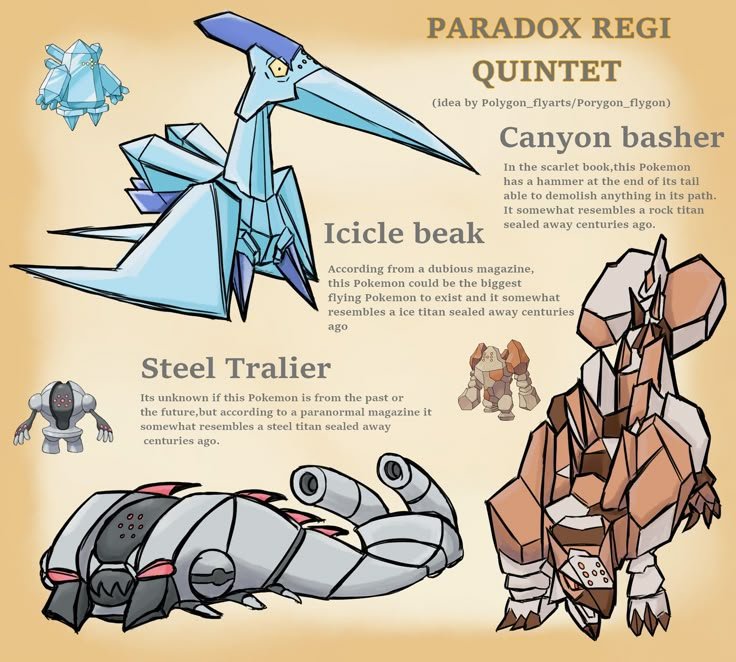
The blank canvas of creativity can sometimes be the most intimidating challenge. You’re ready to design an incredible new creature, a "Fakemon" that fits seamlessly into the vibrant world of Pokémon, but where do you even begin? That's where the magic of designing Fakemon with random types comes in. It’s not about giving up control; it’s about injecting a powerful dose of unexpected inspiration, forcing your imagination to forge connections you might never have considered otherwise. This approach isn't just a fun exercise; it’s a proven method for sidestepping creative blocks and crafting truly original designs that stand out.
At a Glance: Sparking Fakemon Creativity with Random Types
- Banish Creative Blocks: Random types provide a concrete starting point, eliminating the dreaded "what if I don't have good ideas?"
- Force Unique Combinations: Blend unlikely types to generate truly novel concepts, pushing beyond common tropes.
- Develop Deeper Lore: Unusual type pairings often inspire richer backstories, habitats, and behaviors.
- Iterate and Refine: The random types are a springboard, not a straightjacket. You're encouraged to evolve the idea.
- Tools Are Your Friends: Use online generators or simple dice rolls to get started, then leverage resources for art and design.
Why Embrace Randomness? Beyond the Blank Canvas
You might think randomness means a loss of creative control, but in design, it often acts as a potent catalyst. Think of it as a creative prompt on steroids. Instead of staring at an empty page, wondering what combination hasn't been done to death, you're given a specific, often quirky, directive. This isn't just about fun; it’s a strategic way to overcome several common design hurdles.
When you're handed a type combination like "Ghost/Fairy" or "Steel/Bug," your brain immediately starts seeking connections. What could that be? How would it look? What kind of personality would it have? This problem-solving mode is far more productive than simply trying to conjure something from thin air. It forces you to explore new aesthetic territories and narrative possibilities, making your Fakemon feel fresh and genuinely surprising. You'll often find yourself creating concepts that are far more imaginative than what you might have produced by sticking to familiar comforts.
The Core Mechanism: How Random Types Work for Fakemon
At its heart, the process is straightforward: you generate one or two Pokémon types randomly, and then you design a creature around them. This isn't just a fun parlor trick; it's a dedicated design challenge that provides a concrete framework. Instead of wrestling with concept, aesthetic, and mechanics all at once, you narrow your initial focus to the very DNA of your creature: its elemental properties.
Imagine rolling a "Rock" and a "Flying" type. Immediately, images might spring to mind: a gargoyle, a living mountain peak with wings, a creature made of meteoric stone. The types aren't just labels; they're the foundational elements upon which you'll build your entire design. They influence everything from potential abilities and stats to habitat, behavior, and even its color palette. To kickstart this process effectively, many designers turn to tools like Our random Pokémon type generator. These specialized tools ensure a truly unbiased selection, often pulling from the full roster of official Pokémon types, including rarer combinations.
Setting the Stage: Tools and a Winning Mindset
Before you even pick up a digital pen, gathering your tools and adopting the right frame of mind can make all the difference.
Choosing Your Randomization Method
While you could certainly pull slips of paper from a hat, modern tools streamline the process. A dedicated Fakemon Generator, for instance, offers more than just random types. Some advanced versions can even account for "rarity factors," suggesting types that might be more common or uncommon based on specific parameters, much like finding a Water-type more frequently in an "Ocean" route within a game. This "RNG manipulation" can lend an extra layer of realism to your design process, guiding you towards concepts that feel like they belong in a structured game world.
Beyond digital generators, you can also use:
- Dice Rolls: Assign types to numbers (1-18 for single types, then roll twice).
- Card Decks: Create a custom deck with each type written on a card.
- Online Spinners: Simple web tools can quickly generate random selections.
The method matters less than the commitment to letting fate (or the algorithm) guide your initial step.
Cultivating an Open-Minded Design Mindset
The most crucial "tool" you possess is your mindset. When designing Fakemon with random types, approach the initial result with an open, non-judgmental attitude. There's no such thing as a "bad" type combination at this stage. Instead of thinking, "How can I possibly make a Fire/Grass type work?", ask, "What unique story does a Fire/Grass type tell?" Embrace the absurd, challenge your own preconceptions, and be ready for your initial idea to evolve dramatically. The goal is to innovate, not to simply recreate.
Phase 1: Decoding Your Random Type Combo
Once you have your random types in hand, the real fun begins. This phase is about peeling back the layers of your assigned types to uncover their inherent potential.
Brainstorming Core Concepts: What Do These Types Say?
This is where you become a detective. Each type carries a wealth of connotations, imagery, and elemental properties. Your job is to explore these individually and then, more importantly, discover how they intertwine.
Let's take an example: you've rolled a Poison/Psychic type.
- Individual Meanings:
- Poison: Toxins, venom, illness, decay, sneakiness, dangerous beauty, chemical reactions, pollution, defense mechanisms.
- Psychic: Mind, telekinesis, illusions, intelligence, wisdom, mystery, dreams, nightmares, manipulation, confusion, extrasensory perception.
- Combined Interpretation: Now, merge these. What happens when mind and venom meet?
- A creature that poisons the mind with illusions?
- A psychic entity that feeds on fear or negative emotions, which manifest as a physical toxin?
- A highly intelligent, venomous creature that uses its mind to lure prey or outwit opponents?
- A serene, beautiful but deadly creature that administers poison with a thought.
Don't be afraid to think broadly and gather a wide range of ideas. Consider existing Pokémon with similar types (or lack thereof) not to copy them, but to identify gaps and opportunities for differentiation. Look to nature, mythology, and even everyday objects for inspiration that embodies your combined types.
Considering Stat Spreads & Abilities: The Mechanics of Your Monster
The types you choose aren't just for show; they dictate a significant portion of your Fakemon's in-game functionality.
- Stat Spreads:
- High HP/Defense/Special Defense: Often seen in Rock, Steel, Water, and Grass types.
- High Attack/Special Attack: Common in Fire, Fighting, Electric, Psychic, and Dragon types.
- High Speed: Frequently found in Flying, Electric, and Bug types.
- A Steel/Flying Fakemon might suggest a bulky, fast tank or a quick, defensive scout. A Fairy/Dark type could be a fast special attacker or a tricky support Pokémon.
- Unique Abilities: Think about how the types could manifest a compelling in-game ability.
- For our Poison/Psychic example, an ability could be "Toxic Mind," where any opponent affected by a Psychic-type status move (like Confuse Ray or Hypnosis) also becomes poisoned. Or "Mental Immunity," granting resistance to status conditions caused by Poison-type moves.
- These abilities should feel logical within the creature's lore and provide interesting strategic options in battle. Resources exist to guide you in choosing plausible movesets and abilities, ensuring your creations are not only imaginative but also balanced.
Phase 2: Visualizing the Fakemon — From Concept to Creature
With a solid conceptual foundation, it’s time to bring your Fakemon to life visually. This is where your types truly dictate aesthetics.
Shape & Form Language: Blending Elemental Visuals
How do your types manifest physically? This stage is about translating abstract concepts into concrete forms.
- Amalgamation: Do the types physically merge? A Water/Fire Fakemon could literally be a creature of hardened magma cooled by water, or a geyser-like entity.
- Contrast: Do the types stand in stark opposition, creating a compelling visual tension? A delicate Fairy-type creature encased in heavy Steel armor, or a shadowy Dark-type with vibrant, glowing Psychic elements.
- Subtlety: Sometimes, the blend is more nuanced. A Flying/Ground type might be a burrowing creature with aerodynamic fins, or a stony avian with earthy plumage.
Consider silhouettes. A strong silhouette is recognizable even without color or detail. How do your combined types influence the overall shape? Think about the G-FauxPokémon's Monster Art Tutorial, which emphasizes aspects like lineart, flat colors, and shading, specifically geared toward Fakemon. While created in Photoshop, these principles are universal and applicable to any layered art program. Don't feel pressured to mimic Ken Sugimori's iconic style; developing your own artistic voice is part of the fun.
Color Palette: Painting with Your Types
Colors are an immediate visual cue for types.
- Primary Type Dominance: Does one type's colors stand out more?
- Secondary Type Accents: Does the other type provide highlights or contrasting features?
- Unique Blends: How do you create a palette that feels like a genuine fusion?
- A Steel/Grass Fakemon might feature metallic greens and silvers, or rust-colored metal overgrown with vibrant moss.
- A Ghost/Fighting type could be depicted with spectral purples and grays, offset by dynamic, muscle-like contours or glowing fighting energy.
Experiment with different shades and hues. Sometimes, an unexpected color choice can elevate a design.
Evolutionary Lines & Gimmicks: Growth and Transformation
Random types can also dictate intriguing evolutionary paths.
- Type Progression: Does your Fakemon gain a type upon evolution? Does it shed one? A Normal-type might evolve into a Normal/Flying, or a Fire-type could evolve into a Fire/Dark.
- Form Changes: Could your Fakemon have regional variants or specific forms tied to its unique type blend? Perhaps a Fire/Ice Fakemon has an "active" form that's more Fire-dominant and a "dormant" form that emphasizes Ice.
- Mega Evolutions/Gigantamax: How would your randomly typed Fakemon tap into these powerful forms? What new visual elements or abilities would emerge from its type combination?
Thinking about evolution helps you explore the full potential of your initial random types, making your creature feel like a complete part of a larger ecosystem.
Phase 3: Crafting the Lore & World Integration
A Fakemon isn't just a collection of stats and an image; it's a living, breathing part of a world. The random types offer a rich wellspring for developing its story.
Habitat & Behavior: Where Does It Live and How Does It Act?
Your types are your best guide here.
- Habitat: Where would a Ground/Electric type live? Perhaps in rocky desert mesas where lightning strikes frequently, or deep underground, creating its own electric currents. The Fakemon Generator’s "ROUTE GENERATOR - RNG MANIPULATION?" feature hints at this, with routes like "Ocean" increasing Water-type commonality. This principle can inspire logical habitats for your random type Fakemon.
- Diet: What would a Bug/Dark type eat? Perhaps it's an opportunistic nocturnal scavenger, or it preys on specific types of plants or smaller bug Pokémon in shadowy forests.
- Social Structure: Is your Fairy/Dragon type a solitary guardian of ancient ruins, or does it live in a complex, hierarchical clan?
- Unique Behaviors: Does your Water/Steel type use its body to filter pollutants from lakes, or does it create underwater structures?
These details make your Fakemon feel tangible and believable, fitting within the established "mechanics of existing Pokémon" that good resources advise considering.
Pokedex Entry & Naming: Giving It an Identity
The Pokedex entry is your chance to condense your Fakemon's essence into a concise, evocative paragraph.
- Conciseness: Every word counts. Highlight its most defining characteristics, abilities, and lore elements stemming from its types.
- Evocative Language: Use strong verbs and descriptive adjectives.
- Naming: The name should be catchy and reflective of its types or key traits.
- For our Poison/Psychic example, names could include: Psykro (Psychic + Microbe), Toximind, Delusionom (Delusion + Venom).
- Consider portmanteaus of words related to each type, or play with phonetic sounds that evoke its nature.
A well-crafted Pokedex entry and a memorable name are the final touches that cement your Fakemon's identity.
Navigating Challenges and Pitfalls
While designing Fakemon with random types is incredibly rewarding, it comes with its own set of hurdles.
Overcoming Type Clashes: When Elements Collide
Sometimes, you'll roll types that seem fundamentally incompatible – say, Fire/Ice. This isn't a design flaw; it's an invitation to innovate.
- Embrace the Paradox: A Fire/Ice Fakemon could be a creature of extremes, constantly battling itself, or perhaps one that masters both, creating steam or strange, superheated ice.
- Find the Common Ground: What connects them? Extremes, sudden changes, elemental power. Focus on what happens when these forces interact.
- Focus on a Hybrid Trait: Instead of "fire" and "ice," think "heat regulation" or "temperature manipulation." This abstraction can open new design avenues.
The key is to view these clashes not as obstacles, but as unique design prompts.
Avoiding Generic Designs: Standing Out from the Crowd
Just because you have a unique type combo doesn't guarantee a unique design. It's easy to fall back on generic animal shapes or overly simplistic representations of the types.
- Go Beyond the Obvious: A Grass/Dragon isn't just a dragon with leaves. What if it's a creature that becomes a forest, or a sentient ancient tree with draconic features?
- Add a Twist: Give it an unexpected feature, a quirky personality, or a surprising habitat.
- Reference, Don't Replicate: Look at existing creature designs (not just Pokémon) for inspiration, but always filter it through your unique type combination.
Remember, the goal is to create believable Pokémon, but "believable" doesn't mean "boring."
The "Rule of Cool" vs. "Believability": Finding the Balance
There’s a sweet spot between an unimaginative design and one that breaks all the rules of the Pokémon world.
- Rule of Cool: If it looks awesome and inspires wonder, it’s often worth pursuing, even if it stretches logic a bit.
- Believability: Does it feel like it could actually exist in a Pokémon game? Does it have internal consistency? Does its design reflect its types and potential abilities?
Strive for designs that are both cool and feel grounded. A Flying/Poison type that's a giant, toxic hot air balloon might be cool, but how does it battle? How does it reproduce? Thinking through these questions helps refine the concept into something both exciting and credible.
Beyond Random Types: Expanding Your Design Horizon
Random types are a fantastic starting point, but they're just one arrow in your creative quiver. To truly master Fakemon design, consider broadening your approach.
Considering Rarity Factors
The Fakemon Generator's mention of "rarity factors" is a clue to deeper design considerations. Not all Pokémon are equally common. How would a rare, legendary-tier Fakemon differ from a common route encounter, even if they share similar types? Incorporating rarity into your initial concept can influence complexity, power level, and even the elegance of the design. A common Bug/Flying Fakemon might be a simple moth, while a rare one could be a majestic, iridescent insectoid dragon.
Utilizing Other Random Prompts
What if, instead of types, you randomized other core design elements?
- Random Location: Design a Fakemon specific to a "Crystal Cave," "Volcanic Archipelago," or "Haunted Library."
- Random Concept: Create a Fakemon based on "Ancient Technology," "Dreams and Nightmares," or "Sound Waves."
- Random Evolution Method: Design a Fakemon that evolves only at "Midnight in a Forest," or when it "learns a specific move."
These alternate prompts can provide just as much creative friction as random types, leading to equally unique outcomes.
Leveraging Art Resources
No matter how brilliant your concept, effective execution requires solid art skills. Thankfully, there's a wealth of guidance available beyond simple tutorials. You can explore different art styles and techniques to find what best suits your vision. Whether you're working with advanced art programs that go beyond Microsoft Paint or Photoshop, or just starting with free, easy-to-use online platforms, there are resources to help. The critical thing is to develop your rendering skills for lineart, flat colors, and especially shading (which has its own nuances for fakemon), as detailed in many creature art tutorials. If you're looking to delve into advanced creature design principles, there are comprehensive guides covering anatomy, color theory, and environmental integration that can elevate your work.
Common Questions Designers Ask
Q: What if I hate the types I get?
A: Don't give up immediately! Take a break, then revisit them with a fresh perspective. Ask yourself: What's the least obvious interpretation of these types? Can I make it ironic? If after a genuine effort you're still stuck, it's okay to re-roll. The goal is creativity, not frustration. One strategy is to roll three types, pick two, and save the third for a different project or as an inspiration for the Fakemon's lore.
Q: How many types should I roll?
A: For beginners, a single type can be a great starting point, allowing you to focus on form and concept without the complexity of blending two elements. Once you're comfortable, rolling two types offers the most creative potential and challenge. Three types can quickly become overwhelming and might lead to an overly busy design, so it's generally recommended to stick to one or two, mirroring official Pokémon conventions.
Q: Should I design the art first or the lore?
A: This often depends on your personal creative flow. Some designers find inspiration visually, sketching forms and then inferring behavior and lore. Others prefer to craft a detailed backstory and personality, then translate that into a visual form. When designing Fakemon with random types, the types themselves bridge this gap, offering a solid starting point for both. You might start with a rough sketch, then flesh out lore, then refine the art. Embrace an iterative process, letting each element inform the others.
Q: Where can I share my creations?
A: The Fakemon community is incredibly active online! Many free, easy-to-use online platforms are perfect for sharing your artwork and Pokedex entries. Websites like DeviantArt, ArtStation, and dedicated Fakemon subreddits or Discord servers are excellent places to showcase your work, get feedback, and connect with a vibrant community of Fakemon creators. Sharing is a crucial step for growth and inspiration.
Your Fakemon Journey Starts Now
Designing Fakemon with random types isn't just a design hack; it's a philosophy that champions innovation, resilience, and the sheer joy of discovery. It challenges you to look at familiar elements in new ways, to embrace unexpected combinations, and to tell stories through creature design that are uniquely yours. From the initial roll of the dice to the final polished artwork, every step is an opportunity to learn and grow as a creator.
So, don't let the blank page intimidate you any longer. Grab your preferred randomization tool, generate those types, and see where your imagination takes you. Dive deep into the nuances of your chosen types, then consider how they'd influence everything from habitat and battle mechanics to an engaging narrative. Perhaps you'll even be inspired to uncover more secrets of game design or learn about developing engaging move sets to complement your creations. The world of Fakemon is vast and waiting for your unique contributions. Start designing today!